“Healthy Eating Explained: Why One Diet Doesn’t Fit All”
When most people hear the phrase “healthy eating,” they immediately think of rules. Low-carb. Low-fat. Plant-based. Paleo. Keto. Whole30. Clean eating. The list goes on forever.
Here’s the problem: healthy eating doesn’t mean the same thing for everyone. And the truth is, it never has.
If you’ve ever felt confused by nutrition advice, you’re not alone. The internet is packed with so many “shoulds” and “shouldn’ts” that it feels impossible to know who to trust. One expert says cut carbs. Another says carbs are fine but sugar is the devil. Someone else swears fasting is the answer.
It’s no wonder people end up exhausted, frustrated, and convinced they’re doing everything wrong.
But here’s what I tell my clients, and it changes everything: healthy eating isn’t about following someone else’s definition—it’s about finding what works for you.
Why One-Size-Fits-All Nutrition Doesn’t Work
Think about it. We all live different lives.
- Some of us work long, stressful jobs.
- Some of us are raising kids and grabbing meals on the go.
- Some of us are active every day, while others are just trying to get off the couch after work.
So how could one definition of “healthy eating” possibly work for all of us?
It can’t.
If you’re training for a marathon, your version of healthy eating is going to look completely different from someone who’s recovering from burnout and barely sleeping. If you’re a busy parent, your food choices will look different from someone with endless free time to meal prep.
But here’s the catch: most diets ignore all of this. They give everyone the same list of “good foods” and “bad foods” and expect miracles. That’s why people fall off track—not because they’re weak, but because the plan wasn’t designed for their real life.
The Myth of “Healthy Foods”
Another big mistake people make is labeling foods as either “healthy” or “unhealthy.”
Of course, some choices are more nutrient-rich than others. Nobody’s saying soda and spinach are equals. But the problem comes when people start believing that eating a cookie makes them “bad” or that eating a salad automatically makes them “good.”
Food isn’t moral. Food isn’t good or evil. Food is just food.
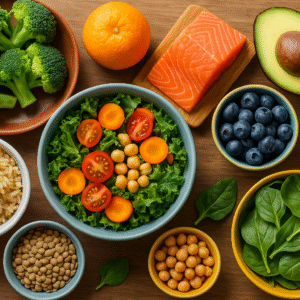
What actually matters is how it fits into your overall lifestyle. A salad doesn’t erase stress, and a slice of pizza doesn’t erase months of progress. Healthy eating isn’t about one perfect meal—it’s about the bigger picture of how you eat and how it makes you feel.
The Signals Your Body Is Already Sending
One of the most overlooked parts of eating well is learning to listen to your own body.
Your body gives you feedback every day:
- You feel energized after some meals and sluggish after others.
- Some foods digest easily, others leave you bloated or tired.
- Sometimes you’re genuinely hungry, other times you’re just stressed, bored, or emotional.
The problem is, years of dieting and rigid rules have made people disconnect from those signals. Instead of asking, “How does this food make me feel?” they ask, “Am I allowed to eat this?”
Getting back in tune with your body is one of the most important parts of eating in a way that’s truly healthy for you.
Why “Balance” Beats Perfection
Here’s another truth that people don’t talk about enough: restriction always backfires.
Sure, cutting out all your favorite foods might work for a few weeks. But how long can you really avoid bread, chocolate, or wine if you love them?
At some point, you break the rule. And when you do, most people swing the other way—overeating, feeling guilty, and starting the cycle all over again.
That’s why I don’t believe in perfection. I believe in balance.
Healthy eating is about knowing when to lean into nutrient-rich meals that fuel your body—and also knowing when it’s okay to enjoy the foods you love without guilt. Both can fit. Both should fit. That’s how you create something sustainable.
What “Healthy Eating” Actually Looks Like
If you’ve read this far, you might be wondering—so what does healthy eating look like in practice?
Here’s the answer: it looks different for everyone. But there are a few guiding principles that almost always hold true:
- Pay attention to energy. Do your meals leave you feeling fueled or drained? That’s a clue about whether they’re working for you.
- Look at patterns, not perfection. One meal won’t make or break your health—it’s the bigger patterns that matter most.
- Respect your lifestyle. If your plan only works when life is perfect, it’s not the right plan.
- Include foods you enjoy. If you hate every meal, you won’t stick with it. Joy is part of health, too.
- Be flexible. Your needs will change. What works this year might not work next year—and that’s okay.
Healthy eating is less about rigid rules and more about building awareness, flexibility, and trust with your own body.
Why This Matters
The reason most people feel stuck with food isn’t because they don’t care. It’s because they’ve been told the wrong story about what “healthy” looks like.
They’ve been sold the idea that there’s one perfect diet, one perfect plan, one perfect way to eat. And when that plan doesn’t work for them, they assume the problem is them.
But the problem was never you. The problem was the plan.
When you shift the definition of healthy eating away from rules and toward something personal, everything changes. You stop feeling guilty for enjoying food. You stop hopping from diet to diet. And you finally start to build a way of eating that works with your life instead of against it.
Closing Thoughts
So the next time someone asks you what “healthy eating” really means, here’s the best answer:
Healthy eating is about finding what fuels your body, supports your goals, and still lets you live your life.
It doesn’t need to look like anyone else’s version. It doesn’t need to follow the latest trend. It just needs to work for you.
Because at the end of the day, your health is personal—and your food should be too.